
Annapurna
by Maurice Herzog
Summary
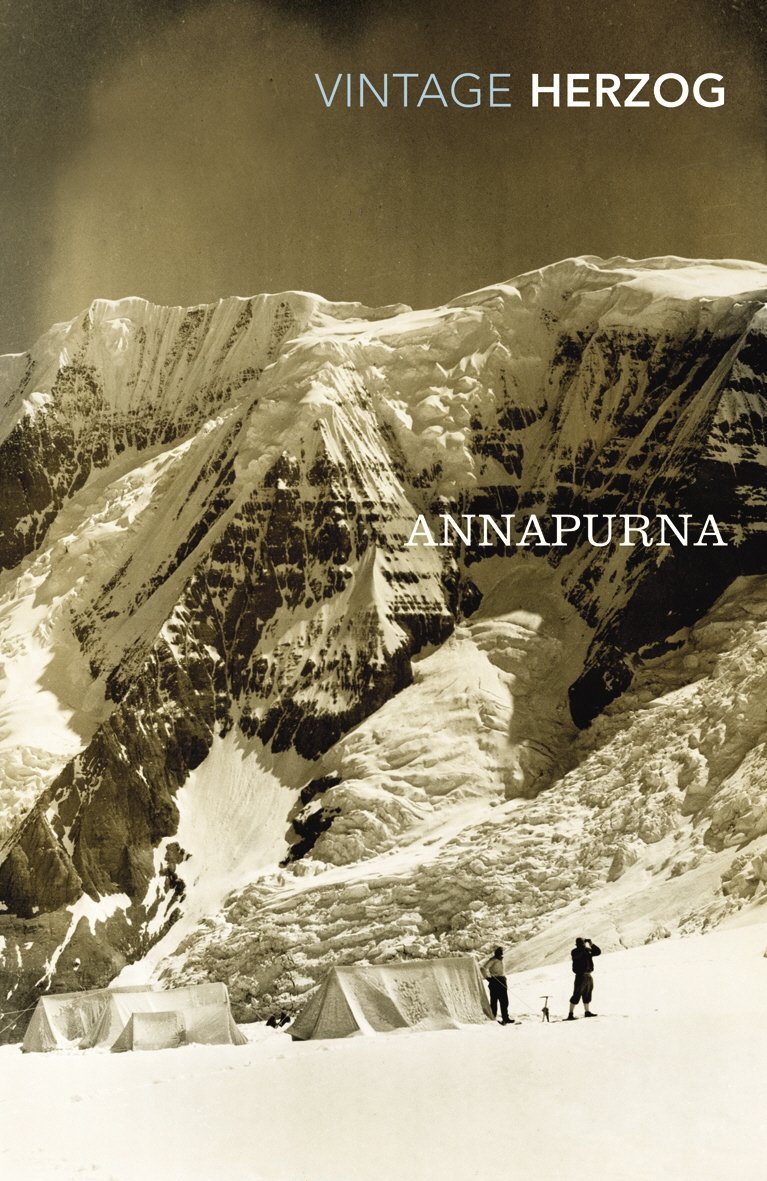
Annapurna is Maurice Herzog’s account of the 1950 French expedition that achieved the first ascent of Annapurna I, marking the first time any 8,000-metre peak was successfully climbed. Set in an era of limited equipment, sparse maps, and little Himalayan experience, the book describes extreme cold, navigational uncertainty, and the devastating physical consequences of altitude and frostbite. Beyond the summit itself, Herzog recounts the heavy price paid after success, as survival and evacuation became battles in their own right. The book stands as a foundational work in high-altitude mountaineering history, capturing both triumph and sacrifice.
Buy on Kindle (£7.99)
Buy in Paperback (£10.11)
What you’ll learn
Annapurna is a landmark in mountaineering literature, documenting the first ascent of an 8,000-metre peak in 1950. Maurice Herzog’s account reflects the expedition style and values of its era: bold objectives, hierarchical leadership, and national ambition.
The book’s power lies as much in its aftermath as in the summit itself. Herzog describes the devastating physical consequences of extreme altitude and frostbite, offering a stark reminder of how limited knowledge and equipment once were. Modern readers may find the tone dated or selective, but the historical significance is undeniable.
Read today, Annapurna works best as a document of its time. It provides insight into early Himalayan logistics, leadership challenges, and the willingness to accept extraordinary risk. Paired with more contemporary accounts, it offers valuable perspective on how mountaineering ethics, safety, and preparation have evolved over the decades.
Related climbs and preparation
Use these links to keep planning: return to the book list, explore preparation guides, or jump to a related climb.