
K2: Life & Death on the World's Most Dangerous Mountain
by Ed Viesturs
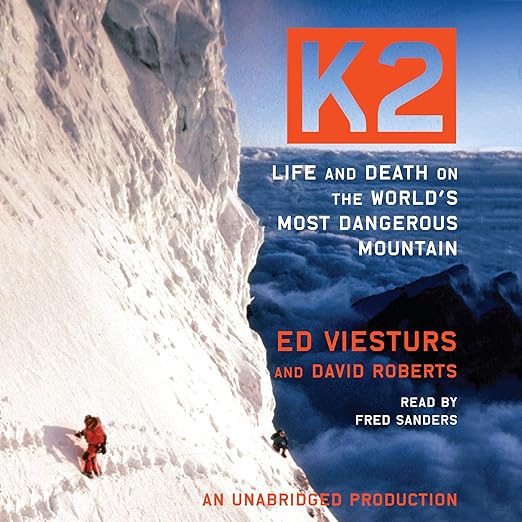
Summary
K2: Life & Death on the World's Most Dangerous Mountain is Ed Viesturs’ stark and analytical examination of why K2 has earned its reputation as the deadliest of the world’s great peaks. Drawing on his own expeditions as well as historical tragedies, Viesturs breaks down the mountain’s unique dangers—steep terrain, volatile weather, avalanche-prone slopes, and the absence of easy retreat routes. Rather than framing K2 as a test of heroism, the book dissects how small decisions, timing errors, and human ambition can cascade into fatal consequences. The result is a sober, experience-driven study of risk, showing how K2 relentlessly exposes weaknesses in planning, judgment, and teamwork, and why survival on the mountain depends less on strength than on discipline, humility, and knowing when not to climb.
Buy on Kindle (£3.49)
Buy in Paperback (£12.17)
What you’ll learn
K2: Life & Death on the World's Most Dangerous Mountain is a sober, analytical, and at times unsettling examination of why K2 stands apart from every other 8,000-metre peak. Rather than telling a single expedition story, Ed Viesturs structures the book around patterns—recurring mistakes, environmental realities, and human behaviours that repeatedly turn K2 into a killing ground. His tone is calm and methodical, which makes the subject matter feel even more serious; this is not a book about glory, but about consequences
One of the book’s greatest strengths is how clearly Viesturs explains K2’s objective dangers. He breaks down the mountain’s steepness, lack of safe descent options, unstable weather windows, and avalanche-prone features such as the Bottleneck, showing how climbers are often forced into irreversible commitments high on the route. By weaving his own experiences together with historical disasters, Viesturs demonstrates how even elite, well-prepared teams can be undone by small timing errors or pressure to continue upward. The analysis is unsparing but never sensationalist, treating loss of life with respect and restraint.
As a review of decision-making under extreme risk, the book is both compelling and unsettling. Viesturs repeatedly returns to the idea that K2 does not forgive ambition, shortcuts, or crowd dynamics in the way Everest sometimes does. For readers interested in high-altitude mountaineering, K2: Life & Death on the World’s Most Dangerous Mountain serves as a powerful reality check, reinforcing the author’s lifelong philosophy that survival—not summits—is the true measure of success. It is a thoughtful, authoritative work that deepens understanding of K2 while quietly questioning whether any mountain is worth the price it so often demands.
Related climbs and preparation
Use these links to keep planning: return to the book list, explore preparation guides, or jump to a related climb.